
Struggling with complex flange dimension charts? A small mistake can cause huge project delays and costs. This guide simplifies everything you need to know about ANSI flange dimensions.
ANSI flange dimensions are a set of standardized measurements defined by the ASME B16.5 standard. These specifications, including diameter, thickness, and bolt patterns, are critical for ensuring a proper, leak-proof connection between pipes, valves, and other equipment in a piping system.
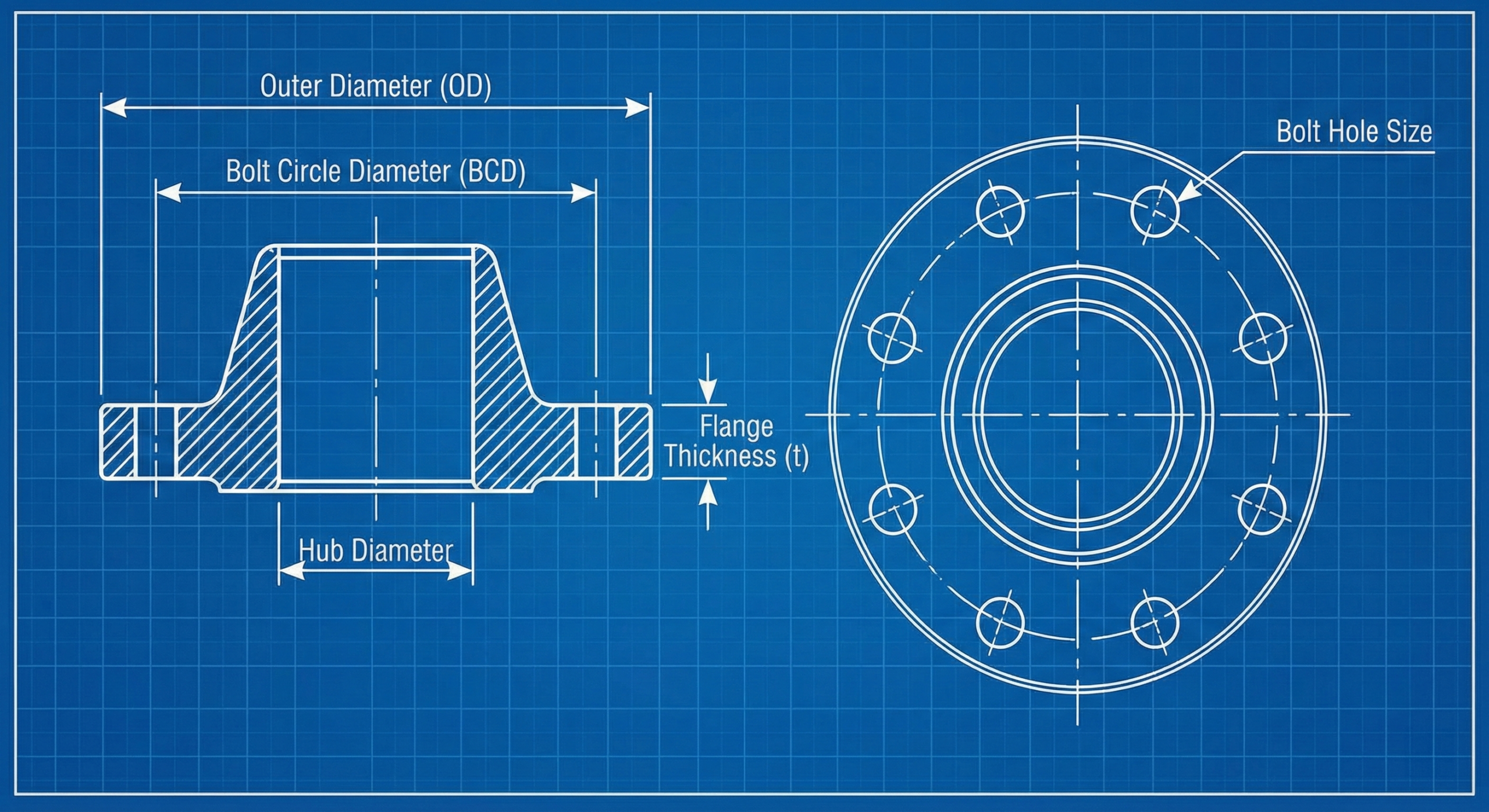
I've been in the stainless steel pipe and fitting business for over 22 years. In that time, I've seen countless project managers get bogged down in the details of dimension charts. They look at the numbers, and they worry. But the real story isn't just in the numbers themselves; it's in what those numbers mean for the safety and longevity of your project. Let's break down these charts so you can order with confidence.
Where Can You Find a Reliable ANSI Flange Dimensions PDF?
Searching for a clear dimension chart? You might be worried about using an outdated or inaccurate PDF from a random website. Let's get you a direct, reliable source.
You can find reliable ANSI flange dimension PDFs on the websites of trusted manufacturers like us or directly from standards organizations. These charts detail dimensions like diameter, thickness, and bolt patterns based on the current ASME B16.5 standard, ensuring proper fit and function.
When you're looking at one of these charts, it's easy to feel overwhelmed. But you only need to focus on a few key measurements for most applications. These ensure the flange will physically bolt onto your equipment.
Key Dimensions to Check
- Outer Diameter (OD): The overall diameter of the flange.
- Pitch Circle Diameter (PCD): The diameter of the circle that runs through the center of all the bolt holes. This is critical for alignment.
- Number and Size of Bolt Holes: This must match the connecting flange perfectly.
Here's a quick example of what you might see for a popular flange size:
| Nominal Pipe Size | Outer Diameter (OD) | Pitch Circle Diameter (PCD) | No. of Bolts |
|---|---|---|---|
| 4" | 9.00" | 7.50" | 8 |
Using a PDF from a manufacturer like HuaboPipe means you're getting data that corresponds directly to the products we make. We ensure our charts are always up-to-date with the latest ASME B16.5 revisions. This saves you the risk of designing around old information.
Why is ANSI Flange Thickness So Important?
Is flange thickness just another number on a chart? A slightly thinner flange can lead to catastrophic failure under pressure. This single dimension is critical for safety.
Flange thickness is crucial for withstanding system pressure and preventing dangerous leaks. The ASME B16.5 standard specifies a minimum thickness based on pressure class. A flange that is too thin becomes a weak point, especially under pressure or vibration, leading to potential system failure.
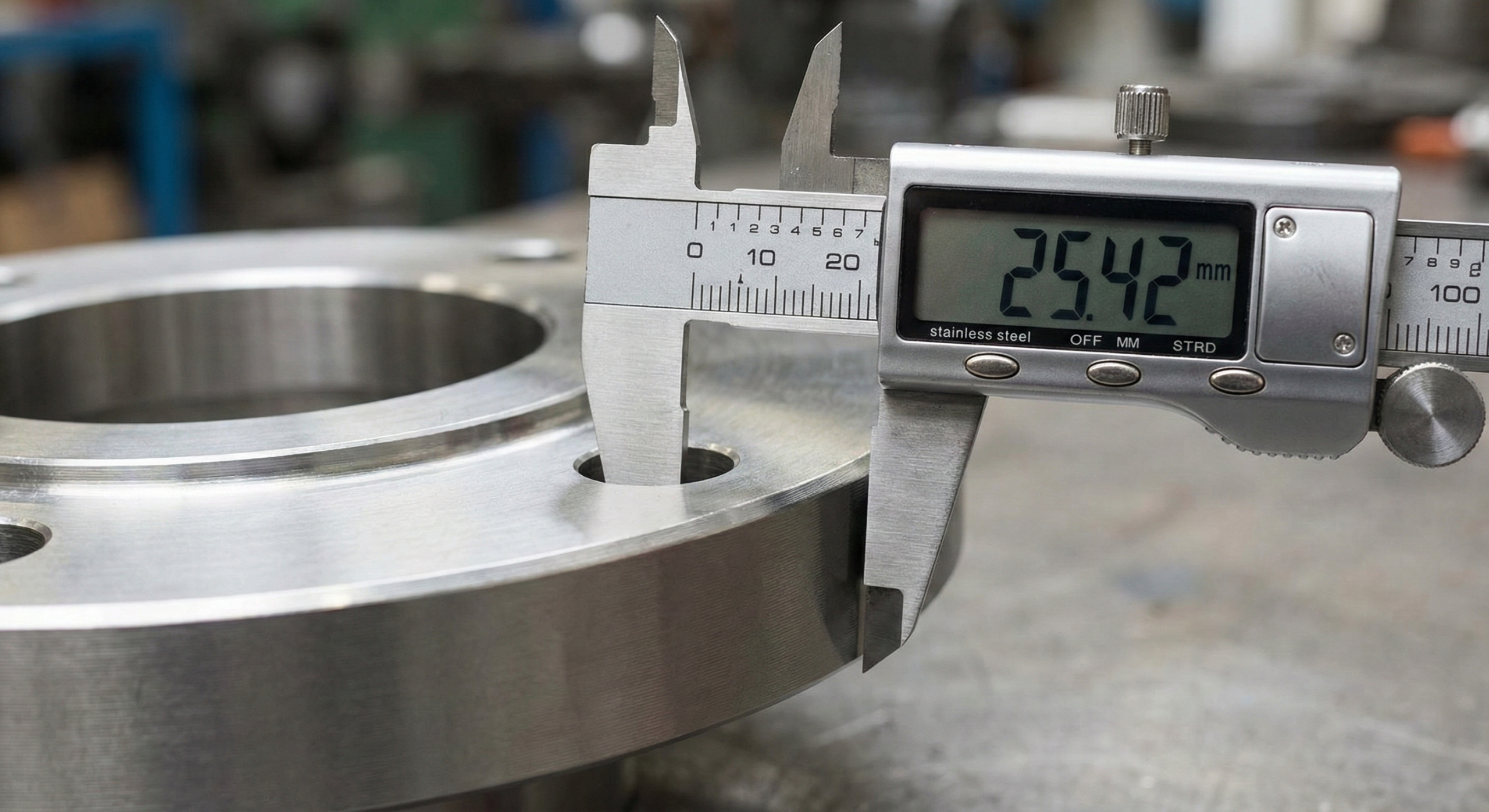
In my 22 years of manufacturing experience, I've learned that "fit" is about more than just a number on a spec sheet. It's about tolerance. The ASME B16.5 standard doesn't give one exact number; it gives an acceptable range. This is where you see the difference between a low-price factory and a quality-focused partner.
Many low-cost factories, to save material, will produce flanges at the absolute minimum allowed thickness. On paper, it meets the standard. But in the real world, when your system experiences a pressure spike or heavy vibration, that minimal thickness becomes the weakest link. It's the first place a failure will happen.
At HuaboPipe, we take a different approach. We aim for the middle or upper end of the tolerance range. We don't try to save that extra 1mm of steel. Why? Because that 1mm isn't our material saving; it's your safety margin. It’s the buffer that keeps your system secure and gives you peace of mind.
How Do You Convert ANSI Flange Dimensions to mm?
Working on an international project? Converting imperial inches to millimeters can be tricky, and a small rounding error can lead to a big mismatch. Let's make it simple and accurate.
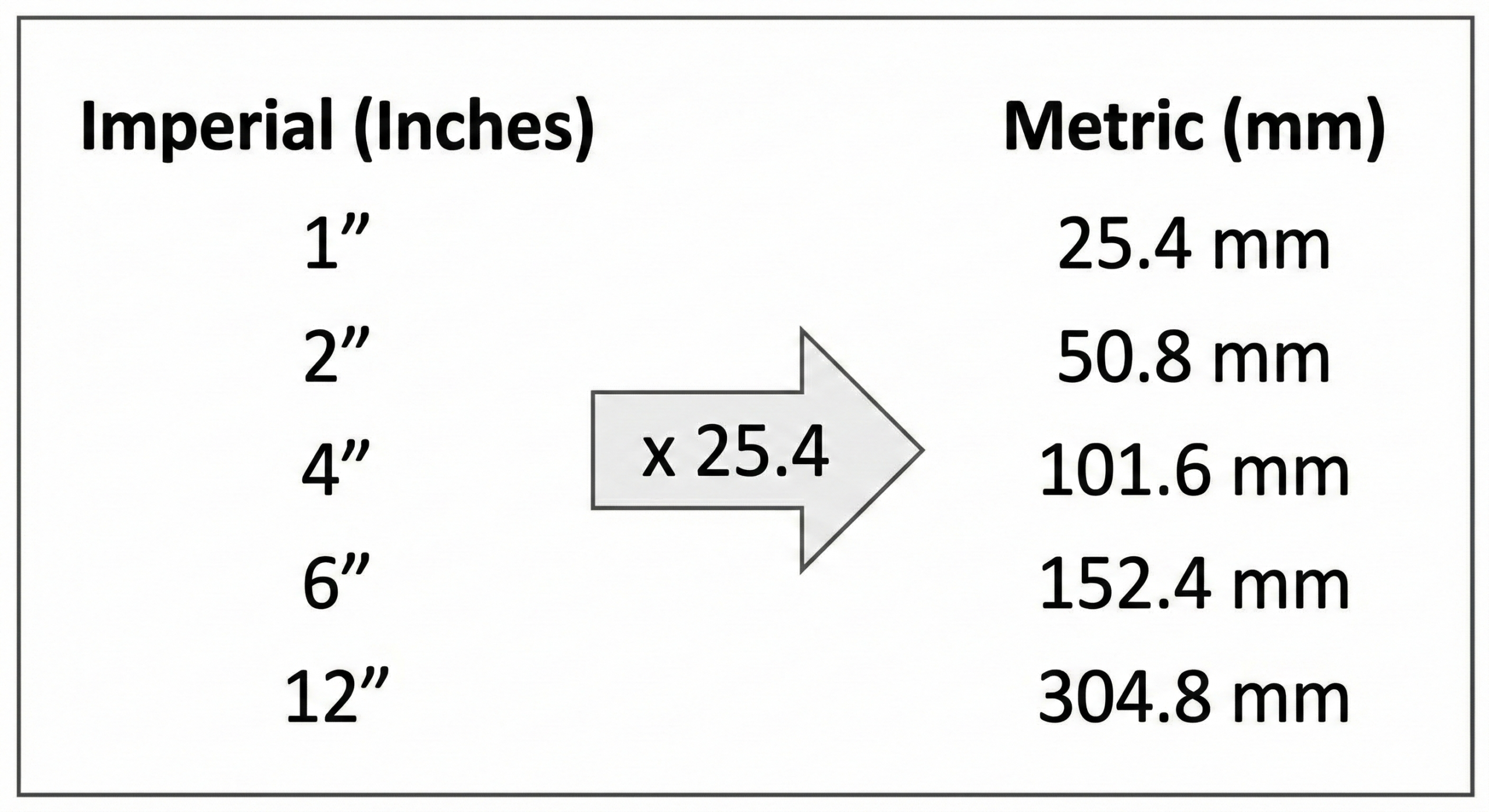
To convert ANSI flange dimensions from inches to millimeters (mm), you multiply the inch value by the exact conversion factor of 25.4. For example, a 2-inch dimension is exactly 50.8 mm. Always use this precise factor to ensure your flanges fit perfectly in metric systems.
In today's global market, we work with engineering teams from all over the world. A project might be designed in the US (using inches) but built in Europe (using millimeters). This is where clear communication and accurate conversions are essential. A simple mistake can cause major headaches.
For example, I once worked with a client who rounded the conversion factor down to 25. Over the large diameter of a 24-inch flange, that small rounding error resulted in a discrepancy of nearly 10mm. The flanges didn't fit.
To prevent this, we make sure our documentation is crystal clear. We often provide dimensions in both units. Here's a quick conversion table for common nominal sizes:
| Imperial (Inches) | Metric (mm) |
|---|---|
| 1" | 25.4 mm |
| 4" | 101.6 mm |
| 6" | 152.4 mm |
| 12" | 304.8 mm |
We do this because our job isn't just to make a flange. It's to ensure the part we deliver fits seamlessly into your project, no matter where you are in the world.
What Are the Key Dimensions for an ANSI 150 Flange?
Need the specs for a common Class 150 flange? Getting a single dimension wrong, even on this standard component, can halt your installation. Here are the critical numbers.
ANSI 150 flanges are designed for lower-pressure applications. Their key dimensions are defined by ASME B16.5 and include the outer diameter, bolt circle diameter, and the number and size of bolt holes. These are standardized to ensure interchangeability between different manufacturers.
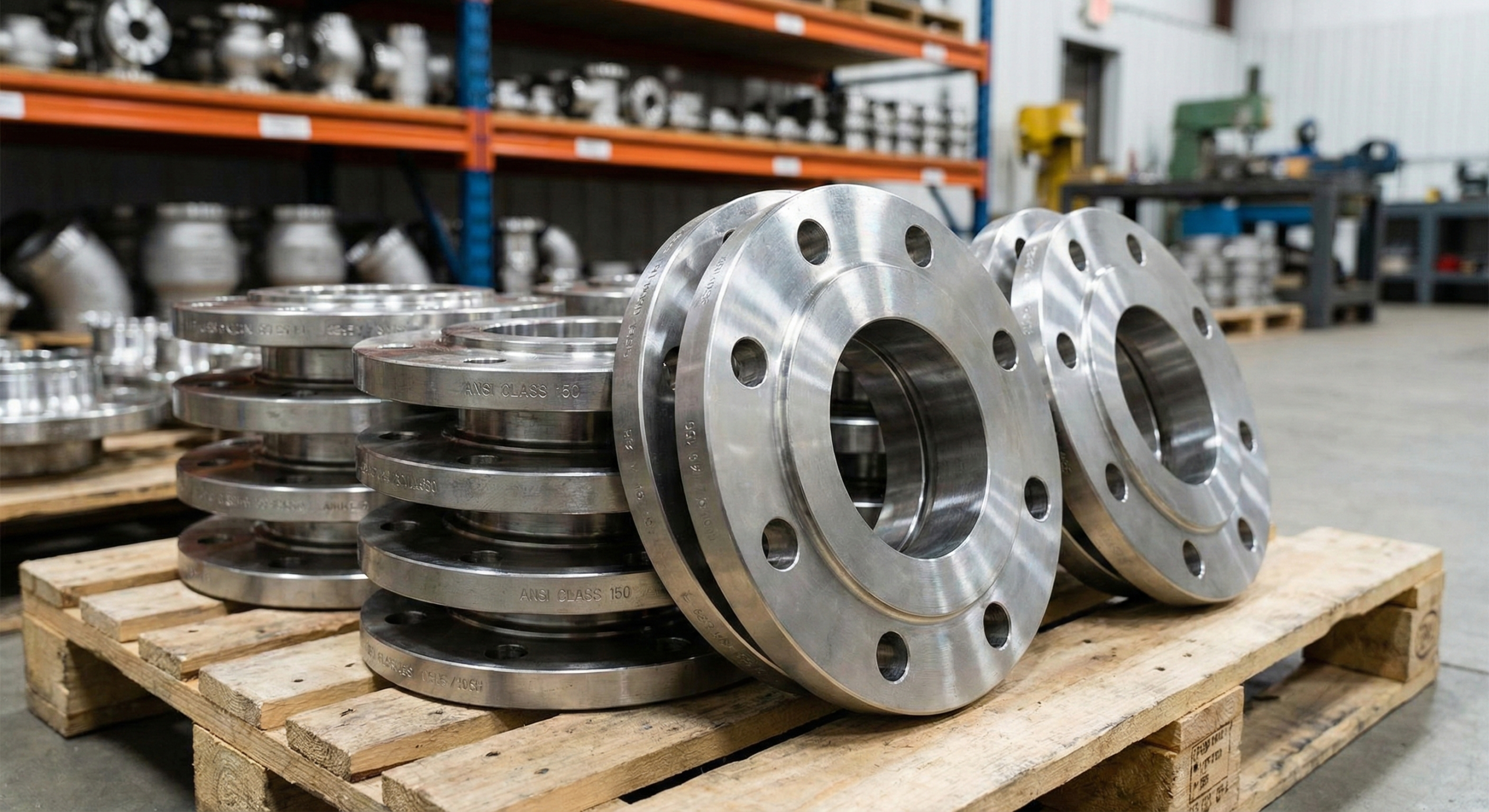
The "Class 150" designation refers to the pressure-temperature rating. It's the most common class used in applications like water treatment, low-pressure steam, and other general industrial services. Because they are so common, it's easy to assume they are all the same, but you still need to verify the details.
I remember a client who accidentally ordered Class 300 bolts for a Class 150 flange installation. The bolt diameters were larger, and they simply wouldn't fit through the holes. The entire installation crew had to stop work for a day while they sourced the correct hardware. It was a costly mistake over a simple detail.
Here are the key dimensions for a few common sizes of Class 150 flanges to help you avoid that situation:
| Nominal Pipe Size | Outer Diameter (in) | Bolt Circle Dia. (in) | No. of Bolts | Bolt Hole Dia. (in) |
|---|---|---|---|---|
| 2" | 6.00 | 4.75 | 4 | 0.75 |
| 4" | 9.00 | 7.50 | 8 | 0.75 |
| 6" | 11.00 | 9.50 | 8 | 0.88 |
Always double-check both the flange dimensions and the required bolt specifications.
What Are the Specific Dimensions for a 3" ANSI Flange?
Looking for the exact measurements of a 3-inch flange? Don't rely on guesswork for this common size, as its dimensions change significantly with its pressure rating.
A 3" ANSI flange's dimensions vary by pressure class. For a Class 150, the outer diameter is 7.5 inches with 4 bolt holes. For a Class 300, it grows to 8.25 inches with 8 bolt holes. Always specify the pressure class when ordering.
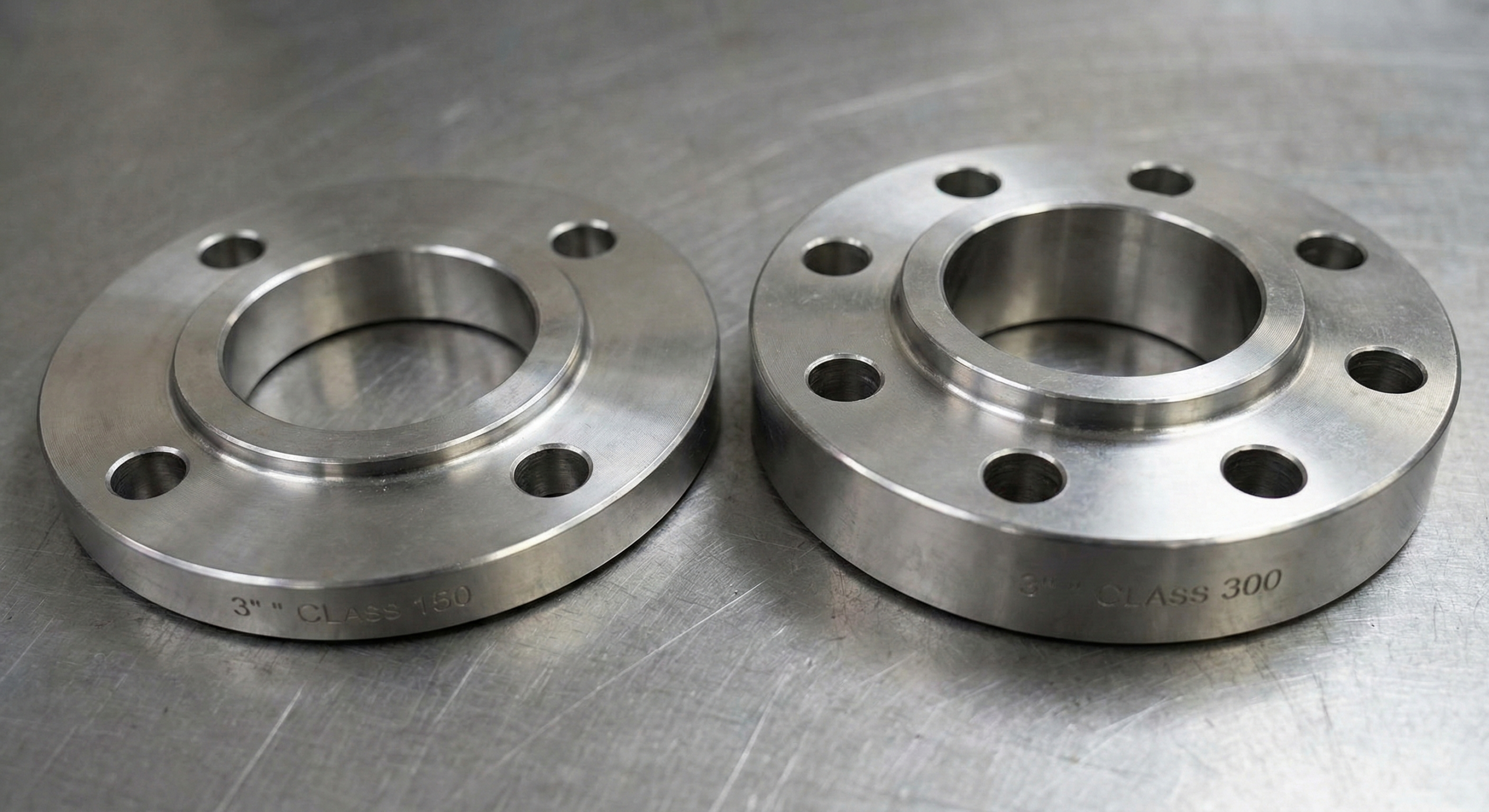
A 3-inch pipe is a workhorse in many industries, but the flange you choose for it depends entirely on the pressure it needs to handle. As the pressure class increases, the flange must become thicker, larger, and use more bolts to safely contain the force. This is a fundamental principle of mechanical engineering.
Let's look at how the specifications for a 3-inch flange change across different pressure classes. This shows you why just asking for a "3-inch flange" isn't enough information.
3-Inch Flange Dimensions by Pressure Class
| Dimension | Class 150 | Class 300 | Class 600 |
|---|---|---|---|
| Outer Diameter (in) | 7.50 | 8.25 | 9.50 |
| Flange Thickness (in) | 0.94 | 1.12 | 1.50 |
| No. of Bolts | 4 | 8 | 8 |
| Bolt Circle Dia. (in) | 6.00 | 6.62 | 7.50 |
As you can see, a Class 600 flange is significantly more robust than a Class 150. It's thicker and uses twice as many bolts on a larger circle to distribute the clamping force. Using a Class 150 flange in a Class 600 application would be incredibly dangerous.
Are You Looking for an ANSI Flange Dimensions PDF in mm?
Managing a metric-based project? Finding a reliable dimension chart already converted to millimeters can be a huge time-saver and prevent costly conversion errors.
Yes, many global manufacturers like HuaboPipe provide ANSI flange dimension charts directly in millimeters (mm). These PDFs pre-convert all standard inch-based measurements to metric, which prevents conversion errors and simplifies procurement for international projects, especially in Europe and Asia.
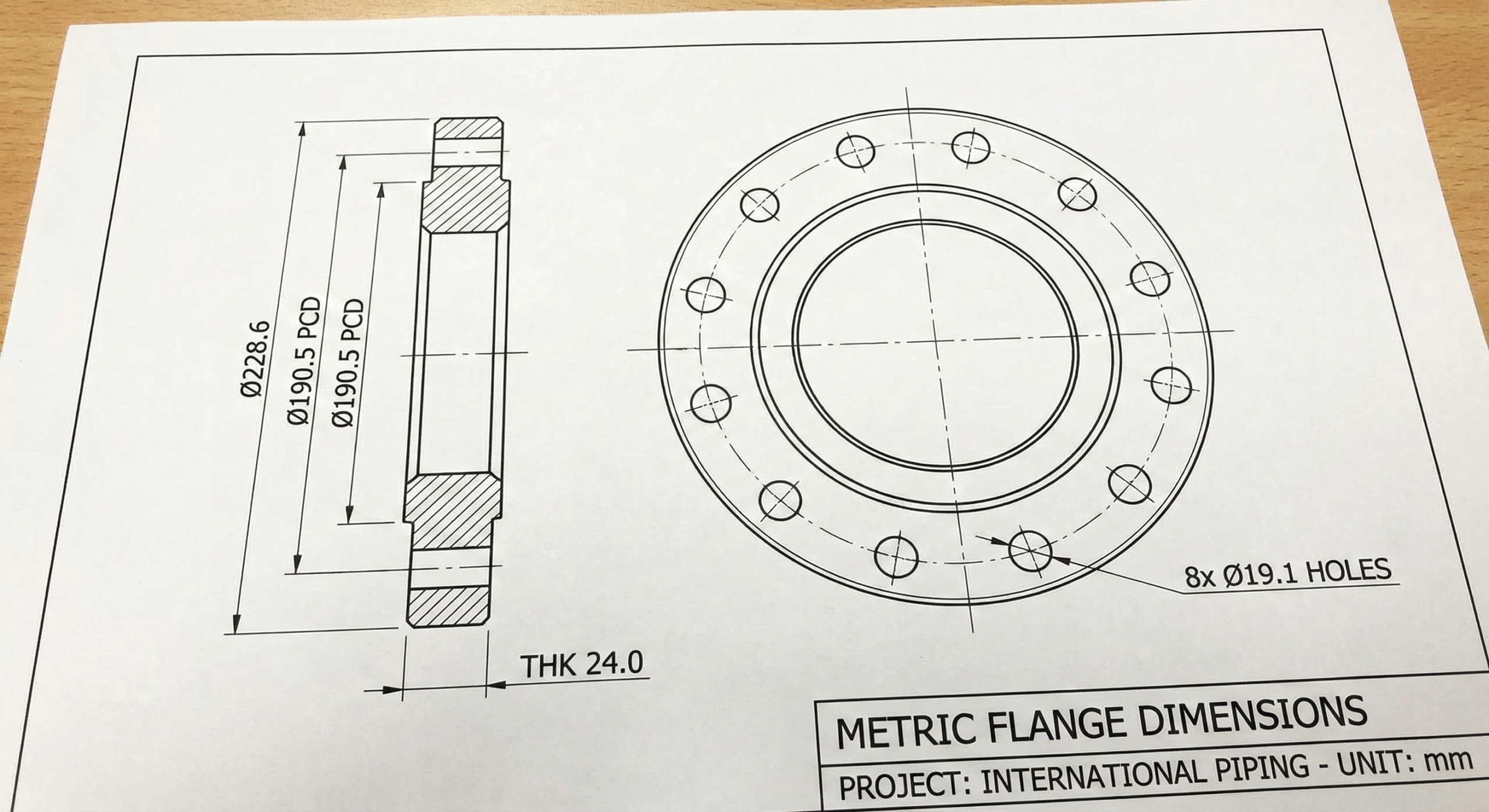
As a manufacturer that exports worldwide, we understand that our clients in Germany, Japan, or Brazil work primarily in the metric system. Forcing them to constantly convert from inches is inefficient and introduces risk. That's why providing clear, accurate documentation in metric units is a standard part of our service.
I worked on a large project for a client in Southeast Asia. Their entire set of drawings and plans was in metric. By providing them with a complete set of flange dimension sheets in millimeters from the very beginning, we streamlined their entire technical review and approval process. Their engineers could directly compare our flange specs to their plans without having to pull out a calculator for every single number. This simple step saved them time and gave them confidence in us as a supplier who understood their workflow. It shows that we aren't just selling a product; we are providing a complete solution.
What's the Difference Between ASME and ANSI Flange Dimensions?
Confused by the terms ASME and ANSI? You're not alone. Using the wrong term might not get you the wrong part, but understanding the difference is key to compliance.
Functionally, there is no difference in the dimensions. ANSI adopted the standard written by ASME. While the term "ANSI flange" is common, the correct technical standard is "ASME B16.5." When you request an ANSI flange, you will receive a product made to the ASME B16.5 specification.

Think of it this way. The American Society of Mechanical Engineers (ASME) is a group of engineers who write the technical rulebook. They created the B16.5 standard, which details exactly how to make flanges. The American National Standards Institute (ANSI) is like a librarian who reviews the rulebook and gives it an official stamp of approval for national use.
So, while people have been saying "ANSI flange" for decades, the document that actually governs its manufacturing is from ASME.
Why This Matters for You
As a procurement manager or engineer, what you really need to look for is compliance with ASME B16.5.
- Certification: This is the standard that will be listed on a Mill Test Report (MTR).
- Quality Control: Our quality checks are performed against the tolerances and requirements laid out in the ASME B16.5 document.
- Interchangeability: Adherence to this standard is what guarantees that a 4" Class 150 flange from us will mate perfectly with a 4" Class 150 valve from another compliant manufacturer.
So, while you can continue to use the term ANSI, know that the quality and compliance are rooted in the ASME standard.
Are Metric Flange Dimensions Different from ANSI Dimensions?
Are you dealing with DIN or EN standards on a project? It's critical to know that metric flanges are not the same as ANSI flanges. Mixing them up is a costly mistake.
Yes, metric flange dimensions, such as those under European (EN 1092-1) or German (DIN) standards, are completely different from ANSI/ASME dimensions. They have different diameters, bolt patterns, and pressure ratings (PN vs. Class). They are not interchangeable.
This is one of the most common and costly mistakes I see in international projects. A team might see a "DN100" flange and assume it's the same as a 4" ANSI flange. They are close in pipe size, but they will absolutely not bolt together.
I remember a project where a contractor in the Middle East was connecting an American-made pump (with ANSI flanges) to a European-made piping system (with DIN flanges). They didn't realize the difference until the parts were on-site. The bolt holes didn't line up at all. It caused a two-week delay while they had to source expensive and custom-made adapter flanges.
Let's look at a direct comparison to see how different they are:
| Feature | 4" Class 150 (ANSI) | DN100 PN16 (EN/DIN) |
|---|---|---|
| Outer Diameter | 228.6 mm (9.0") | 220 mm |
| Bolt Circle Diameter | 190.5 mm (7.5") | 180 mm |
| No. of Bolts | 8 | 8 |
| Bolt Hole Diameter | 19.1 mm (0.75") | 18 mm |
As you can see, not a single key dimension matches. This is why our first question to any client on an international project is always, "Which standard are you working to?"
Conclusion
Understanding flange dimensions is about more than just numbers. It’s about ensuring safety, reliability, and partnering with a manufacturer who understands that the tolerance is your safety margin.